The evidence
The evidence
What the research says about each thing our devices do, in plain English, with links to every study.
How to read this page. Each section shows how much research is behind it, from ●○○○ to ●●●●, with a link to every study.
Movement
●●●●Well-studied
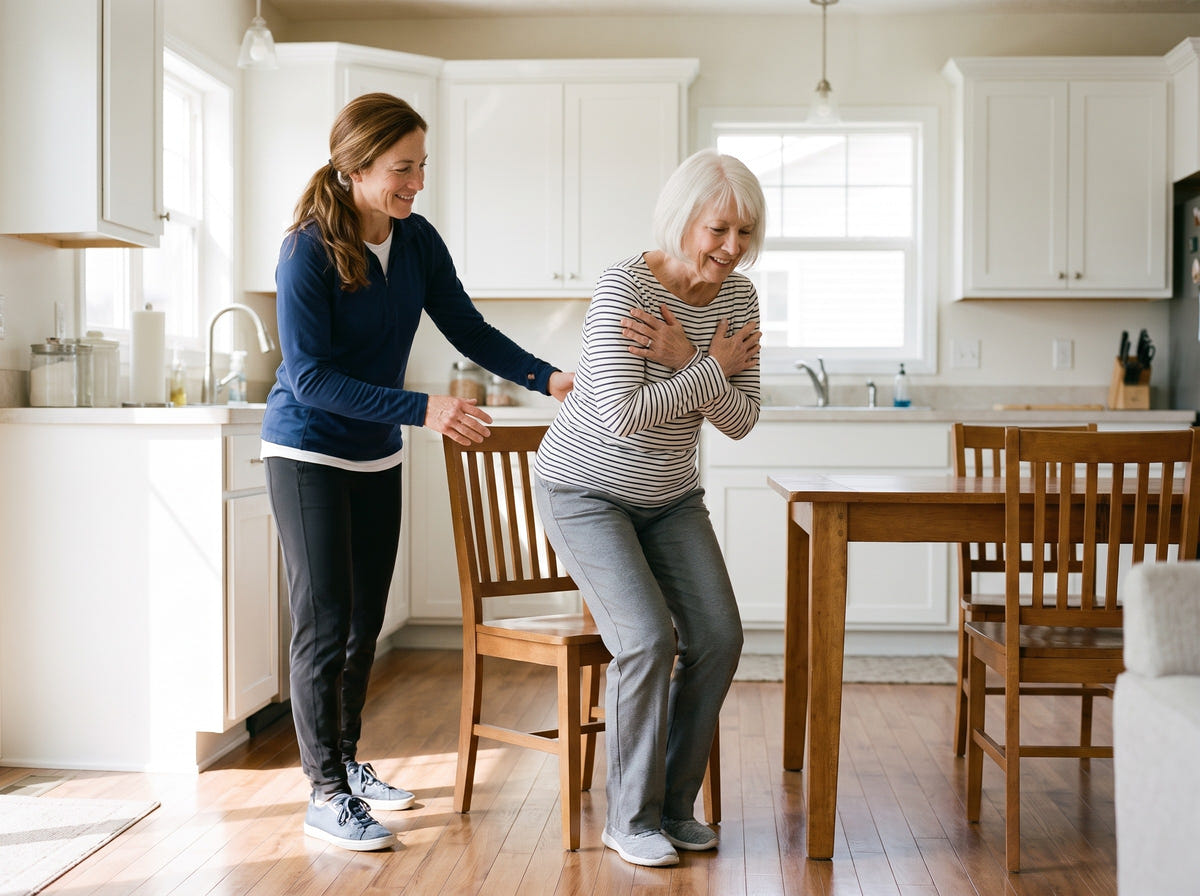
The strongest evidence for joint and back pain. Major guidelines recommend exercise first 1 3, and a review of 139 trials found it eases knee pain 2. Our devices make that movement easier to start.
Warmth
●●●○Some good evidence
Warmth relaxes tight muscles and makes stiff tissue more flexible. Heat wraps eased low-back pain in a Cochrane review, and heat plus exercise helped more 4. For knee arthritis, guidelines conditionally recommend it 1.
For you: one of the best things you can do at home for stiffness.
Gentle pulses (TENS and EMS)
●●○○Relief while it’s on
A review of 381 trials found that gentle electrical pulses (TENS) lower pain during and right after use 5. On our Neck Rest, the pulse is there whenever you want it.
Massage and support
●●○○Good for comfort
Vibration massage can ease sore muscles 6, and a lumbar support keeps more of your back’s natural curve when you sit 7. Both make a long day feel easier.
References
- Kolasinski SL, et al. ACR/Arthritis Foundation guideline for osteoarthritis of the hand, hip and knee, 2019. Full text
- Exercise for osteoarthritis of the knee. Cochrane Review, 2024. Cochrane
- WHO guideline for non-surgical management of chronic primary low back pain, 2023. WHO
- French SD, et al. Superficial heat or cold for low back pain. Cochrane Review, 2006. Cochrane
- Johnson MI, et al. Efficacy and safety of TENS for acute and chronic pain (meta-TENS). BMJ Open, 2022. BMJ Open
- Lu X, et al. Vibration therapy and delayed-onset muscle soreness: a meta-analysis, 2019. Europe PMC
- Andersson GB, et al. Backrest inclination and lumbar support and lumbar lordosis. Spine, 1979. Europe PMC
Reviewed by Dr. Anna Whitfield, PT, DPT · October 2026 · General information, not medical advice.